






Afrofuture Fashion: Gen AI, 3D Fashion in the virtual world - Ufua Ameh
Generative AI, avatars and virtual runways promise a new fashion revolution, and Africa’s designers and textiles must be at its forefront. Fashion is speeding into a digital frontier. Generative AI tools and 3D design platforms now let creators sketch in code and drape in pixels, dramatically speeding up ideation and unleashing new forms of expression. Meanwhile, millions of young consumers (and their avatars) are spending more time in virtual worlds than ever. Once a novelty in digital clothing is becoming an essential part of gaming, social VR and e‑commerce..
As this convergence of technology and style picks up pace, an urgent opportunity arises to ensure that African couture, from bold streetwear to high fashion, is fully represented in the metaverse. Rich heritage patterns and silhouettes can be reimagined in holographic weave, and African creativity can become a global force in the new digital fashion economy. Tech investors and designers have a front-row seat: by embracing these trends now, they can help build an inclusive, sustainable and diverse future for fashion in Web3.
AI isn’t replacing designers, it’s amplifying them. Today’s generative models can take a text prompt or sketch and instantly generate finished outfits, 3D models and marketing assets. As McKinsey & Co reports, generative AI is “not just automation, it’s about augmentation and acceleration,” giving creatives tools to do tasks dramatically faster. AI systems can “input all forms of unstructured data, raw text, images, and video, and output new forms of media, ranging from fully written scripts to 3D designs and realistic virtual models”.

In practical terms, this means a designer’s mood board can be transformed into dozens of fabric variations or digital renders in seconds. It means brands can personalise at scale: AI can tailor virtual try-ons, product visuals and styling to everyone. Indeed, McKinsey notes that AI can even “tailor virtual product try-on and demos to individual consumers”, creating bespoke digital fitting experiences.
New startups are already capitalising on these capabilities. For example, Amsterdam’s Lalaland, founded in 2019 and acquired by Browzwear in July 2025, uses generative AI to create hyper-realistic digital models (avatars) for fashion e‑commerce. By generating thousands of avatars of every size, shape and skin tone, Lalaland helps brands ensure “all customer segments feel represented online”.
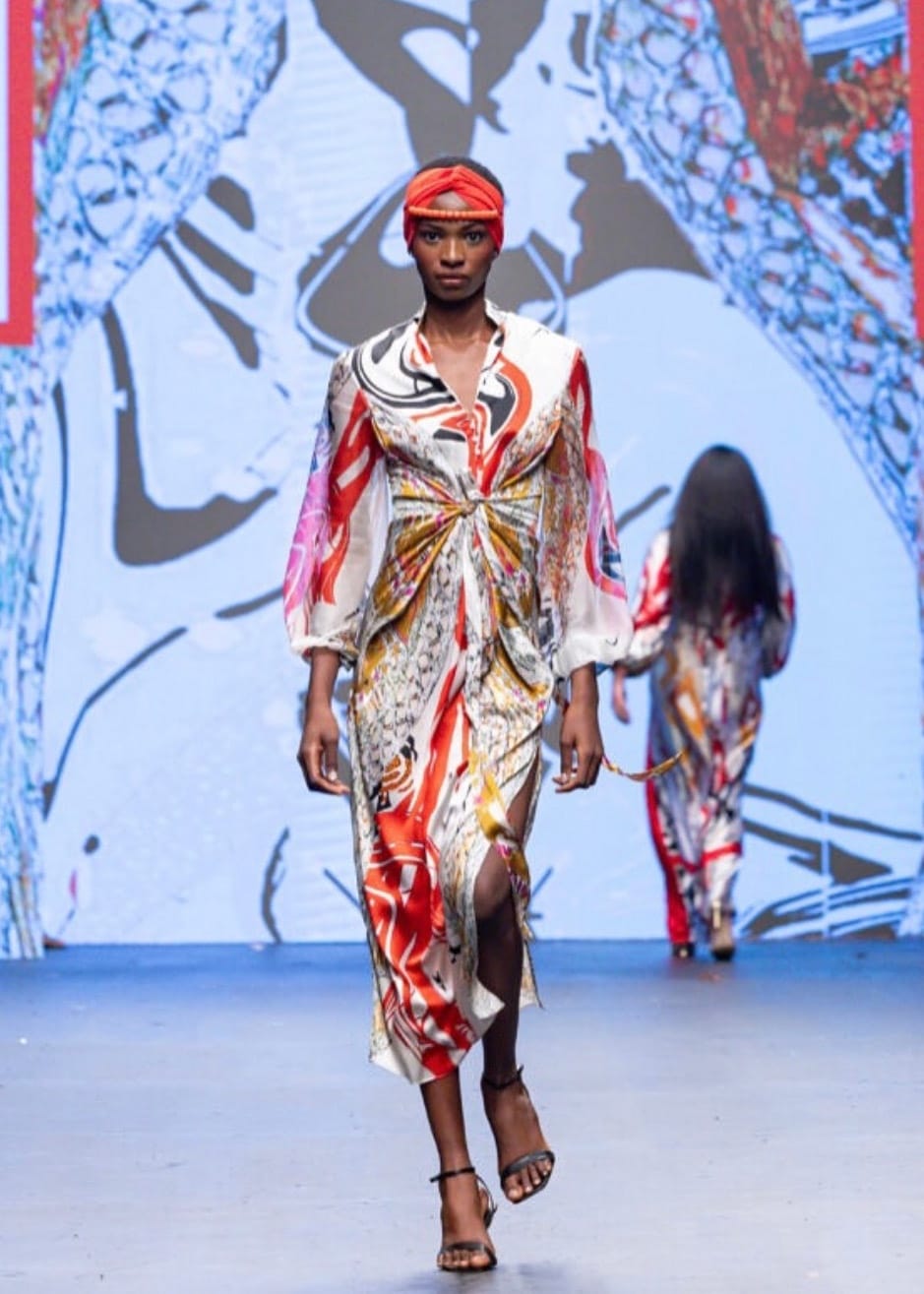
Amid these global shifts, Africa’s rich fashion heritage is a wellspring of untapped innovation. Yet the continent has been largely absent from the metaverse runway, an oversight with huge opportunity costs. An urgent need exists to bring African designers and motifs into 3D fashion. Generative AI and 3D modelling can futurize traditional patterns and silhouettes: imagine Nigerian Aso Oke styled and draped effortlessly on 3D avatars, Dutch wax fabrics animated in silk-like virtual gowns, or Maasai beading rendered as glowing techno-embroidery.
By digitising these elements, African designers can remix heritage and forward-looking design, creating an “Afrofuturist” fashion language that the world would eagerly adopt.
Case in point: In 2020, Congolese designer Anifa Mvuemba went viral with a fully digital runway during lockdown. Her brand Hanifa livestreamed 3D models (notably including plus-size figures) on Instagram, proving that tech can let African creators “course-correct” the industry’s biases. This was more than spectacle; it signalled that “African Fashion” could set new standards for inclusivity and creativity. Since then, entrepreneurial efforts have multiplied.
In Ghana, Balm Labs, founded in 2020, helps designers enter the virtual world. Using 3D campaigns and virtual shows, Balm Labs creates digital prototypes for labels like Senegal’s Diarrablu and Tongoro Studio. By providing 3D sampling services, they slash the waste and cost of physical development, a boon for sustainable design. Similarly, South Africa’s Electric South (together with partners like Twyg and Crossover Labs) has launched Design Futures Lab, training young creators in extended reality and digital storytelling. Initiatives like these prepare a generation to weave African narratives into immersive experiences.
At the designer level, talent is already emerging. Nigeria’s Idiat Shiole has dubbed herself a “metaverse tailor.” Trained in textile design, she realised the local industry’s limits and dove into Marvelous Designer and Clo3D software. She founded HADEEART Atelier, a studio for 3D fashion, motion design and XR. “She has revolutionised traditional textile design to 3D virtual fashion,” a profile notes. Shiole even created Àwèlé, a self-described Afrofuturistic virtual model and influencer – a black-hijabi avatar she styled in digital couture.
Similarly, Nechethebrand, a Lagos-based digital atelier, is producing hyper-modern 3D gowns and streetwear. Its designs consciously weave African storytelling into every pixel: “paying homage to African culture through surreal silhouettes, patterned textures, and glowing designs,” as observed in a recent report. These creators show that couture-level creativity and streetwise style can thrive in code.
African tech entrepreneurs are stepping up, too. Lagos-based startup IyeOgé, Africa’s first AI-powered luxury fashion marketplace, is aiming to connect the continent’s top designers with a global clientele. Founder Iziegbe Okungbowa explicitly notes that while Africa has “extraordinary design talent,” it has lacked “a global digital platform at true luxury standards” to showcase it.

By blending AI curation and e‑commerce logistics, IyeOgé hopes to “amplify its (African fashion’s) voice and visibility on an unprecedented global scale”. This kind of venture underscores that tech investors recognise African design not just as a domestic niche, but as a growth market. It invites others from Silicon Valley VCs to Web3 funds to back projects that scale African creativity worldwide.
Across the continent, voices from Dakar to Johannesburg are urging more inclusion. South African designer King Debs points out that digital fashion lets brands “reimagine” themselves without physical store constraints, even using blockchain and NFTs to sell exclusive digital garments. Fellow designer Lesiba Mabitsela stresses that in Africa’s fragmented infrastructure, virtual try-ons are game-changing: customers can preview clothes in VR without any journey, dramatically expanding market reach. In short, many see virtual fashion as a level playing field. By skipping expensive supply chains and embracing online platforms, African couture and streetwear can compete globally on its own terms. The payoff would be huge: a truly global Web3 fashion landscape, richer in creativity and more equitable in opportunity. The creatives are ready: From famed couturiers to underground streetwear labels, African designers see the metaverse as their next frontier. Tech is catching up, and without question, African consumers (in real life and through their avatars) will expect to see their heritage reflected online. In the words of one startup analyst, the rise of platforms like IyeOgé “marks a pivotal moment for the African fashion industry”. Now the challenge is to act; let’s weave African elegance into the fabric of tomorrow’s fashion. The metaverse is an open runway. It is time to make it truly global.



Laisser un commentaire
Ce site est protégé par hCaptcha, et la Politique de confidentialité et les Conditions de service de hCaptcha s’appliquent.